
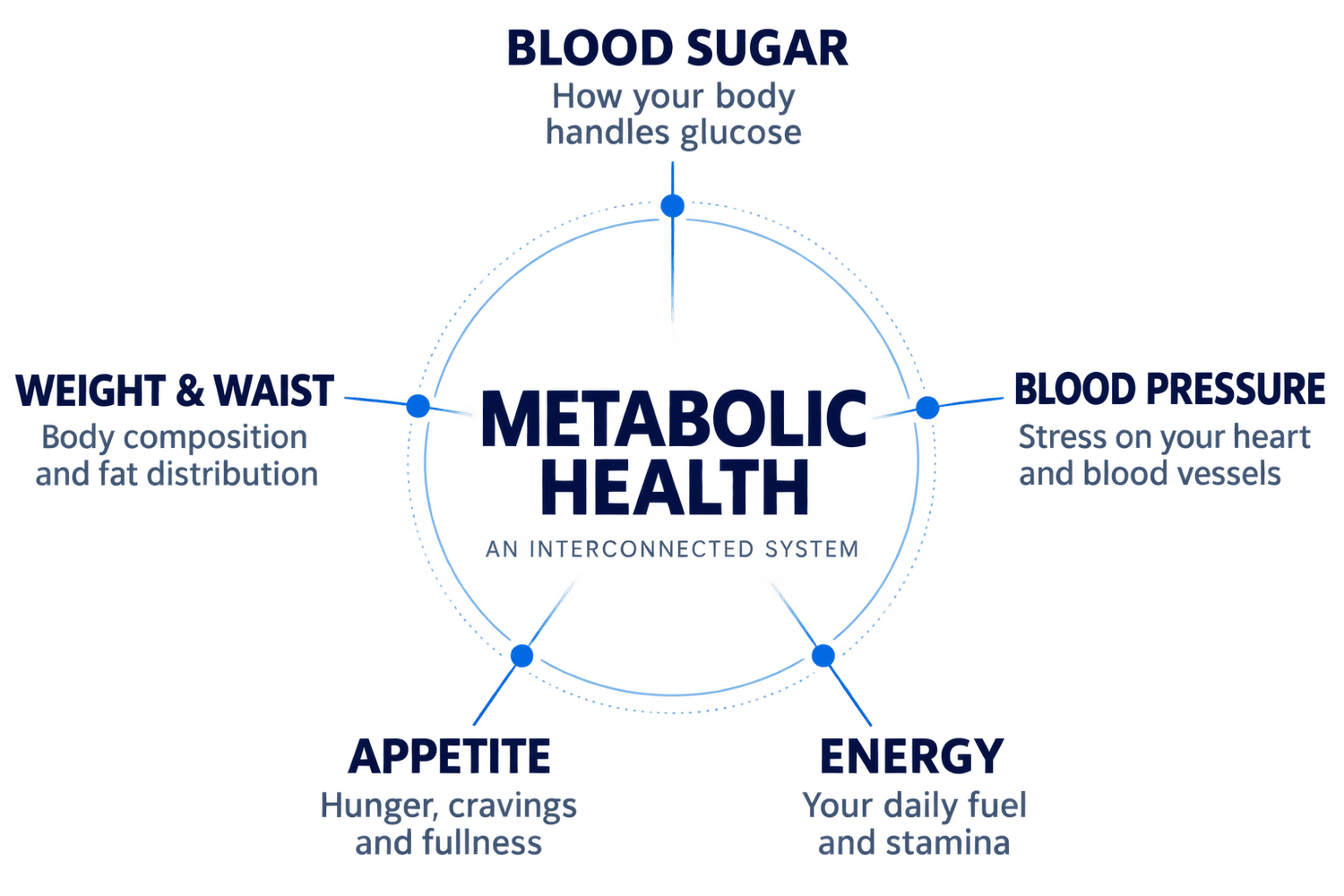
Your metabolic health affects more than your blood sugar.
Weight, energy, appetite, blood pressure and long-term health are all connected to how your body manages energy and responds to insulin.
Metabolic health is about how well your body manages and uses energy.
You may notice the signs before the numbers change.
Metabolic changes don't always begin
with a diagnosis.
Sometimes, they first show up in everyday life.

Waist getting larger
Even when your weight hasn't changed much.

Hungry again too quickly
Especially cravings for sweet or carbohydrate-rich foods.

Sleepy after meals
Particularly after a large carbohydrate-heavy meal.

Harder to lose weight
Despite trying to eat less or become more active.
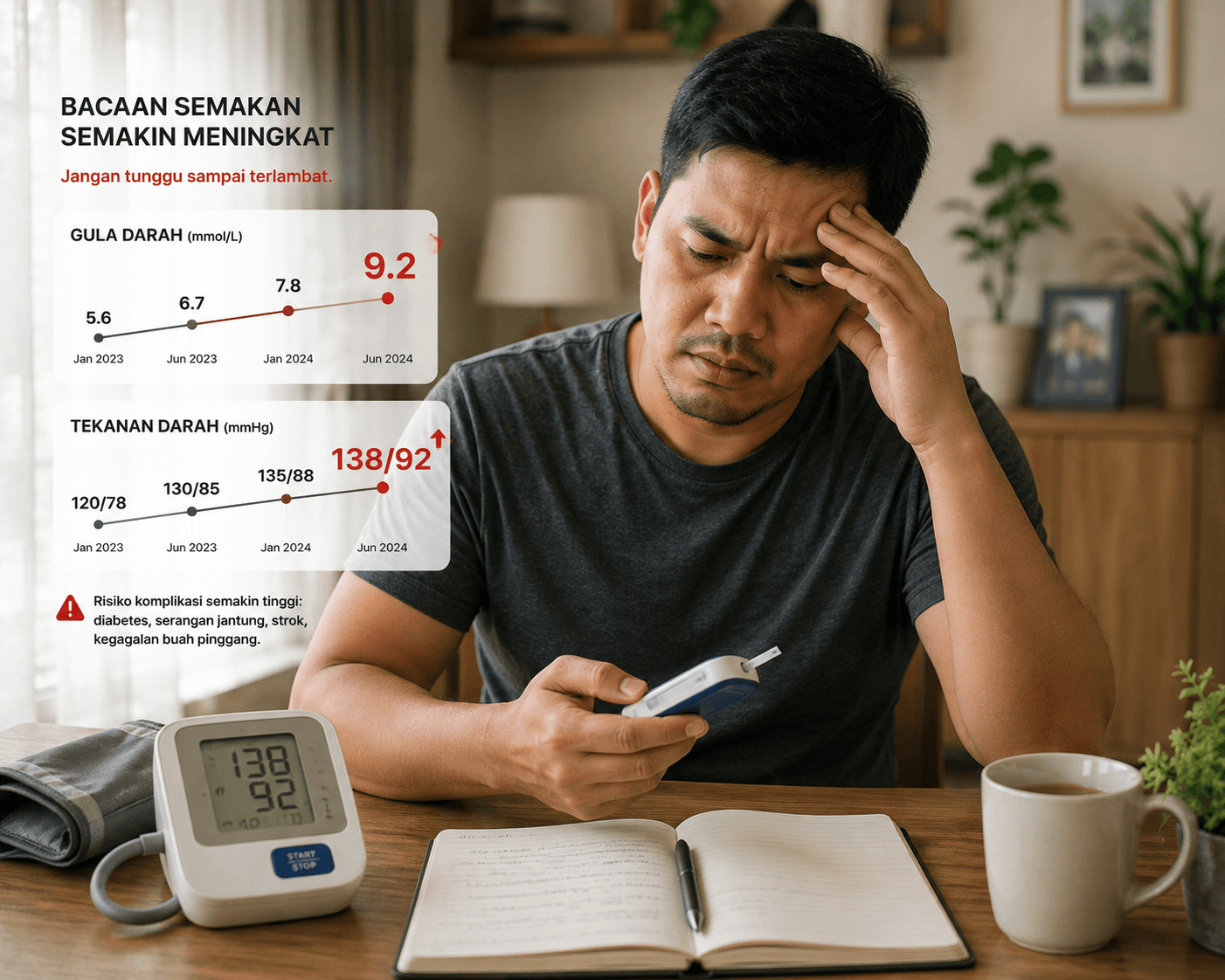
Blood sugar or blood pressure creeping up
Even if you're not yet in the disease range.

Energy that rises and crashes
Feeling energetic at one point, then tired or sluggish later.
These signs don't necessarily mean you have a metabolic problem
— but they can be reasons to look deeper.
These signs may look separate — but they can be connected.
Blood sugar, appetite, body fat, energy and blood pressure don't work independently.
They are connected through systems that regulate how your body manages energy.
One important part of this picture is insulin.
Insulin helps your body move glucose
from the blood into your cells.
When your body needs more insulin
to achieve the same effect,
this may be a sign of insulin resistance.
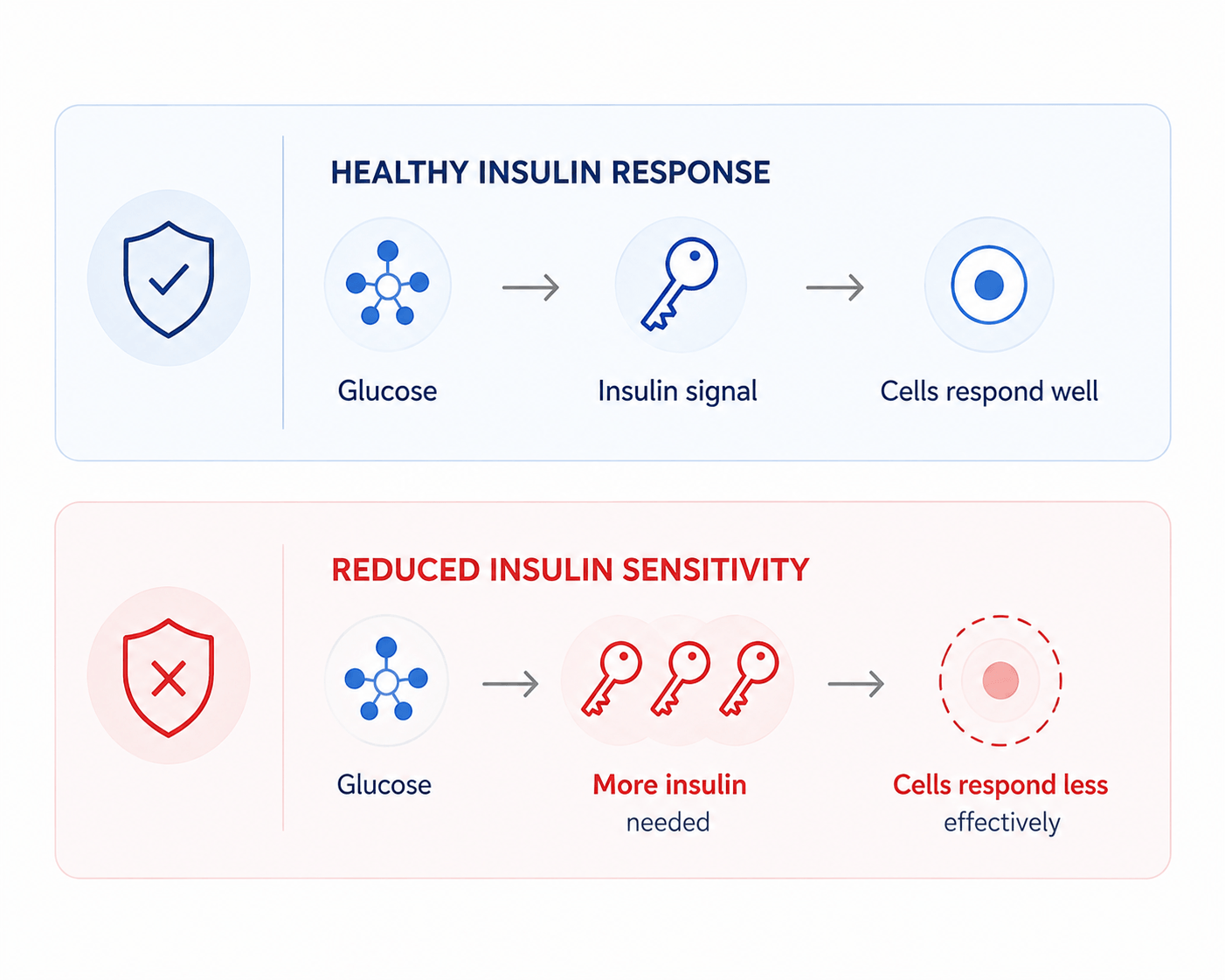
And this can begin long before diabetes is diagnosed.
Your metabolic health is shaped
by what happens every day.
It isn't determined by one food, one blood sugar reading or one habit.
Several parts of everyday life work together over time.

Food & Nutrition
What you eat, how much, and how your meals are structured.

Daily Movement
Walking and everyday activity help your body use energy.

Muscle & Strength
Muscle plays an important role in glucose use and metabolic health.

Sleep
Poor or insufficient sleep can affect appetite, energy and glucose regulation.

Stress & Recovery
Long-term stress can influence appetite, sleep and metabolic regulation.

Body Composition
Where and how much body fat we carry can matter, especially around the waist.

Metabolic health isn't about doing ONE thing perfectly.
It's about improving the system as a whole.
Improving metabolic health starts with
understanding your own pattern.
Your body doesn't respond to food, activity, sleep and stress
in exactly the same way as everyone else.
The first step isn't changing everything.
It's knowing what matters most for you.
01
02
03
04
UNDERSTAND
MEASURE
IMPROVE
REVIEW
Your current pattern
What matters
Practical changes
Track what changes
Understanding is only the beginning.
Better metabolic health comes from turning what you understand into practical everyday choices.
Better metabolic health comes from turning
what you understand into practical everyday choices.
Looking for practical products to support your health?
Explore products selected from a pharmacist's perspective.
Explore products selected from a pharmacist's perspective,
with practical guidance on where they may fit into everyday health.